From Backpacks to Bedtimes: Organizing Your Home for School
The backpacks are packed, the alarms are set, and school-year traffic has officially returned to Metro Atlanta. Some local students headed back to class this week, while others still have a few final days of summer left.
When my kids were younger, I dreaded the back-to-school rush because it meant summer’s slower pace was coming to an end. They loved summer camps, impromptu adventures, catching fireflies, and playing flashlight tag late into the night. But as parents know, the start of school brings more than new teachers and schedules. It also means permission slips, piles of forms, sports practices, packed lunches, homework, missing shoes, and the morning panic of “Mom, I can’t find my backpack!”
Over time (way longer than I care to admit), we finally found a few simple systems that made the school year feel more manageable. Nothing fancy or complicated, just routines that worked for our family and cut down on some of the daily chaos.
1. Create a landing zone near the door
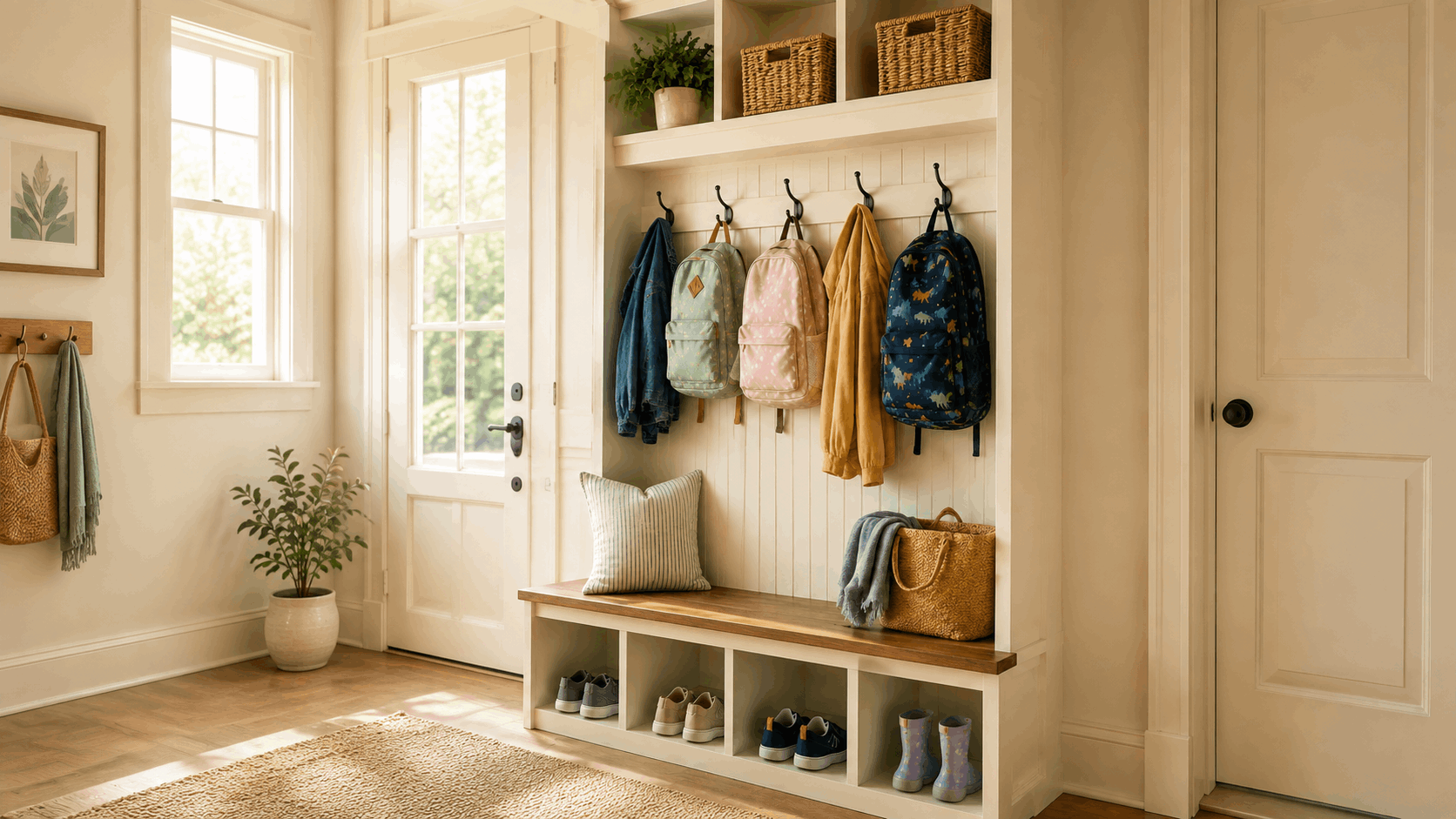
Start with the spot where everyone naturally drops everything the minute they walk in. It might be a mudroom, part of the laundry room, the garage entry, or a small corner near the front door. Give each child a designated hook, basket, or cubby for the things that need to leave the house again the next morning. Backpacks, jackets, shoes, sports bags, and lunchboxes should all have a regular home. You don't need a custom built-in to make this work. A row of sturdy hooks, a shoe basket, and a small tray for keys can turn an overlooked nook or wall into a useful drop zone. Labeling each child's space can also keep everyone's belongings from becoming one big, messy pile of stuff.
This is also a good time to check backpack fit and weight. The American Academy of Pediatrics recommends using both shoulder straps, positioning the backpack in the middle of the back, and packing heavier items closest to the body. Their backpack safety guide offers additional tips.
2. Set up one family command center
School information has a way of arriving everywhere: email, text messages, apps, paper folders, and the occasional wadded-up notice discovered at the bottom of a backpack. For parents, it can feel overwhelming. Choose one central place for the information your entire household needs. A wall calendar, dry-erase board, a corkboard, or shared digital calendar can hold school events, appointments, practices, homework deadlines, and carpool changes. Add a small inbox for papers that need your attention and another spot for completed forms headed back to school. Keeping it all in one place helps you see what's coming before a busy week of work, school, and activities gets away from you.
A command center is most helpful when everyone uses it, so keep it simple enough for children to maintain, too.
3. Make a homework space that fits your child
A good homework spot doesn't have to be a picture-perfect home office. Some children work better at the kitchen table or island where a parent is nearby, while others need a quieter space away from the rest of the family. The American Academy of Pediatrics recommends establishing a regular time and place for schoolwork. The space should be well lit, comfortable and quiet. Their guidance on developing good homework habits is a helpful resource for families.
Keep frequently used supplies like pencils, paper, scissors, markers and a calculator close at hand. A school supply caddy works very well when the homework area serves another purpose during the day.
For older students, phones may be the toughest distraction. Let's be honest, getting a tween or teen to put down a device is challenging. Setting phone boundaries early, especially during homework, can help. A charging spot outside the bedroom or study area cuts down on notifications, giving them a better chance to focus.
4. Do what you can the night before
This may be the least exciting advice on my list, but it can make the biggest difference.
A quick 10-minute reset before bed can save everyone from that frantic 7:00 a.m. search the next morning. Older children can gradually take over their own checklist, which gives us parents one less thing to manage.
Before bedtime, encourage everyone to:
- Choose clothes for the next day
- Pack backpacks and sports bags
- Place band instruments by the door
- Sign and return school papers
- Fill water bottles and place them in the fridge
- Confirm car-pools and after school plans
- Put shoes by the door
5. Give the kitchen a school-year reset
The kitchen usually becomes command central during the school week. Make mornings easier by grouping breakfast items together and setting out cereal bowls, plates, and silverware the night before. A designated pantry or refrigerator area for lunch items and after-school snacks also helps everyone find what they need quickly.
Clear containers or baskets can help children see what is available and pack some items independently. Keep lunchboxes, reusable containers, and water bottles in one cabinet or drawer so no one has to search several places.
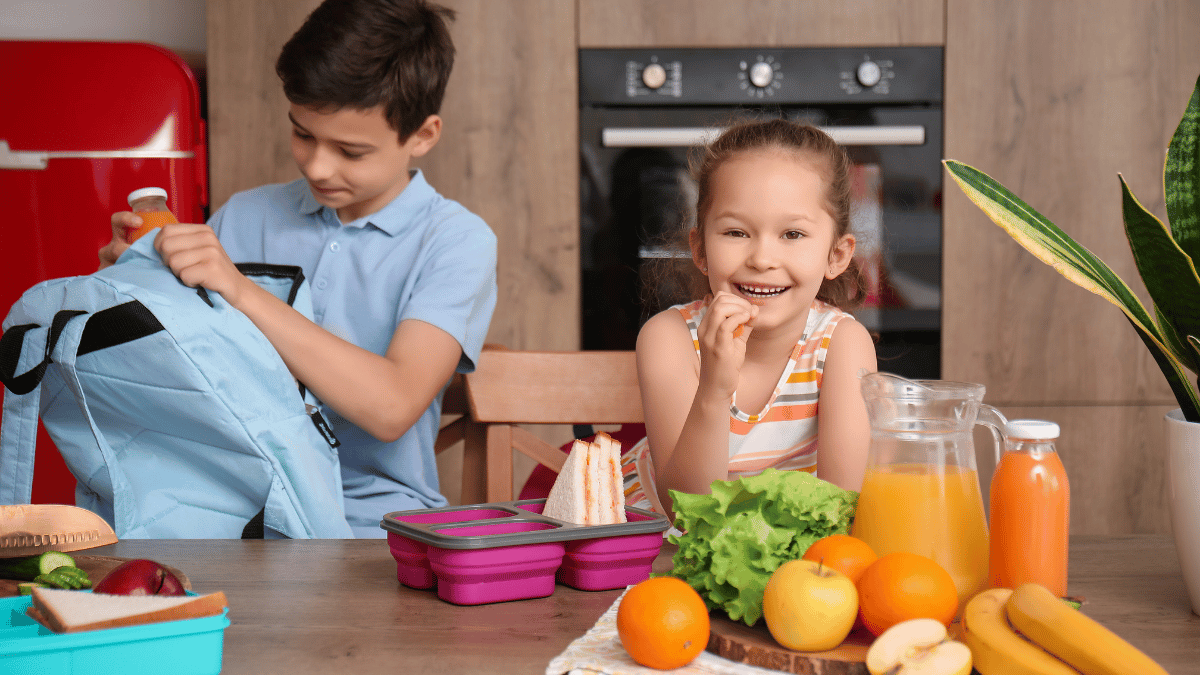
Packing school lunches was never my favorite. It felt time-consuming, especially with each child having different food preferences. Deciding what to pack, keeping perishable foods cold for hours, and fitting everything into a small lunchbox can be a challenge. Food safety matters when lunches sit for several hours, so FoodSafety.gov recommends using an insulated lunch bag with two cold sources for perishable items, such as freezer packs, frozen water bottles, or frozen juice boxes.
One more idea: create a small “eat this first” bin in the refrigerator for produce, yogurt, and other items that need to be used soon. It reduces food waste and saves money while making after-school snack choices easier for your kids.
6. Build an after-school routine with some breathing room
Children often come home carrying more than their backpacks. They may be hungry, tired, excited, overstimulated, or all four at once (usually all four at once🤣). Try a loose afternoon routine/rhythm: unpack, grab a snack, take a break, have a little downtime, and then tackle homework. The order can change depending on your child and the day. Some afternoons the whole routine will go sideways, and that's okay.
The American Academy of Pediatrics notes that a healthy after-school routine may include a snack, exercise, relaxation, and study. The goal is not to schedule every minute. It is to give children a familiar pattern that helps them know what comes next.
7. Ease back into a consistent bedtime
Bedtime was always the hardest part of getting back into the school-year routine. My kids were not interested in going to bed while the sun was still shining and the neighborhood kids were still outside playing. And who could blame them? Getting back on schedule takes time, so give everyone, including yourself, a little grace. A consistent bedtime and wake-up time can make mornings easier for the whole house.
According to the CDC’s sleep recommendations, children ages 6 to 12 generally need 9 to 12 hours of sleep each day, while teenagers ages 13 to 17 need 8 to 10 hours.

Try dimming the lights, limiting screen time before bed, and getting tomorrow's prep out of the way earlier in the evening. A bedtime routine doesn't have to be complicated. Consistency matters more than perfection.
Start small and adjust as you go
Every family has different schedules and needs. A system that works in August may need tweaking once sports, clubs, and homework are in full swing. Instead of trying to overhaul everything at once, start with the part of the day that causes the most stress. Maybe it's getting out the door, keeping track of paperwork, or managing the after-school rush. Work on that one trouble spot first, give everyone time to adjust, and add another change when you're ready.
An organized home doesn’t have to look perfect. It just needs to help everyone find their shoes, grab their backpacks, and get out the door with a little less chaos. Stick with what works, leave room for the unexpected, and the school year may feel a whole lot more manageable for everyone.
And off we go!
Here's to fewer missing shoes, calmer mornings, and a happy school year for all our Metro Atlanta families!
Categories
Recent Posts








GET MORE INFORMATION
